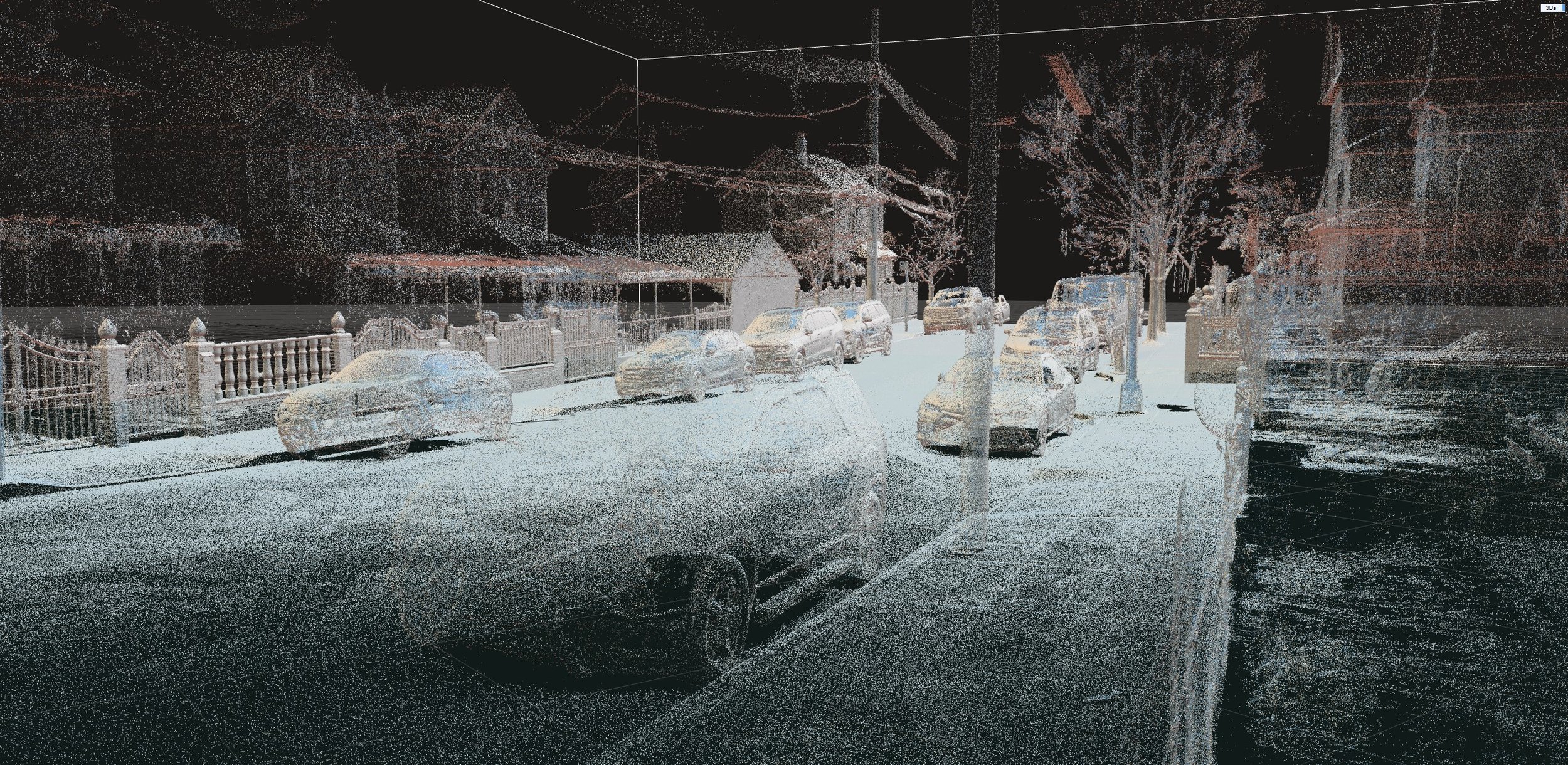
3D model of a section of 183rd street in Queens, New York
Inspired by the NY Times work using 3D models, I proposed to Documented NYC creating a 3D model for their climate change reporting, specifically for a story about a street in New York City that experiences frequent flooding. Unfortunately, due to web developing issues, the 3D model couldn’t be published when the story ran in April 2023. However, the process taught me valuable lessons about optimization and workflow that I've used in later projects.
I used photogrammetry, a technique that creates 3D models from still images. I scanned 183rd street, between 90th and 91st avenues, in Jamaica, Queens, a 270-foot long section lined with two-story homes.
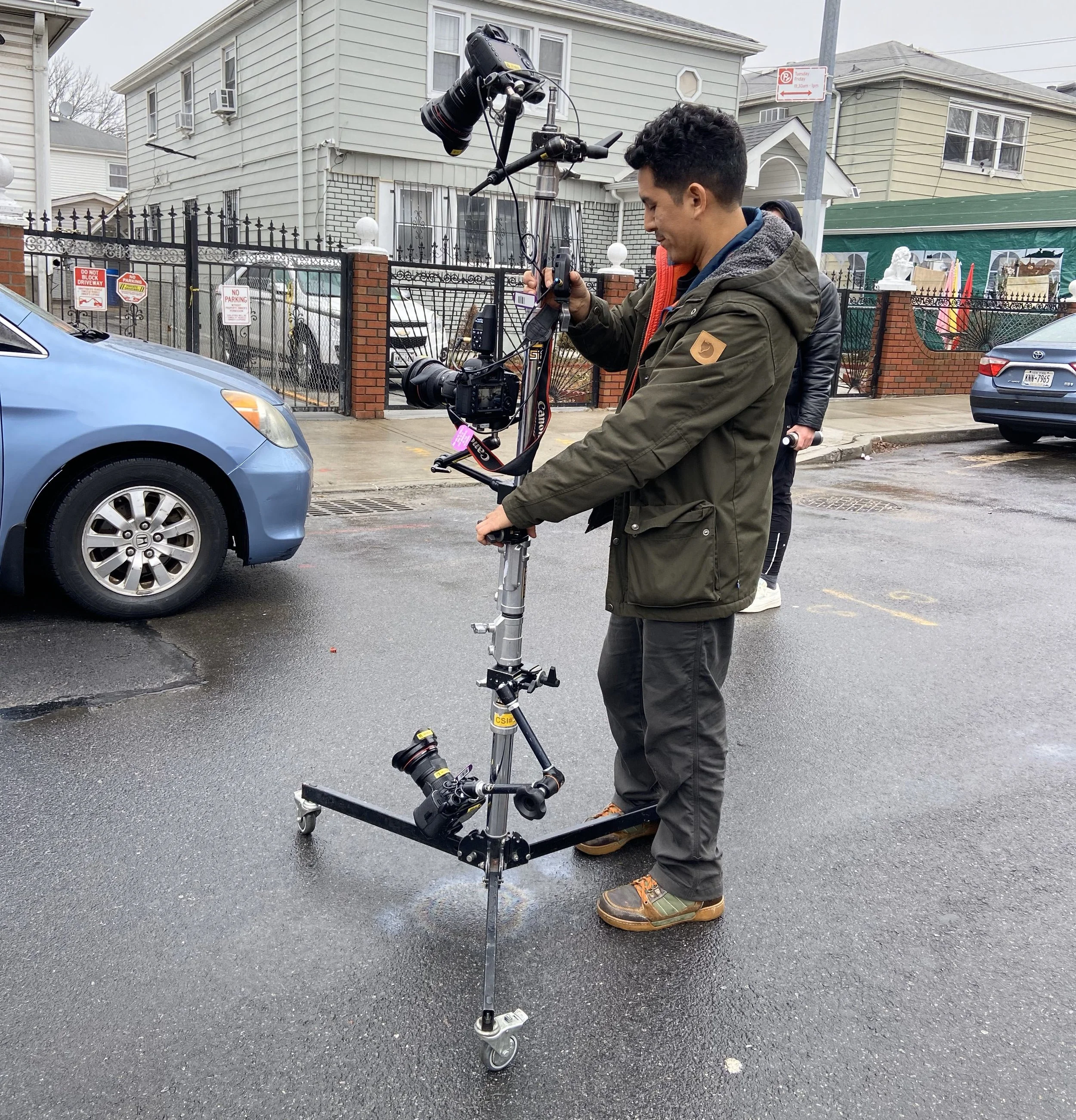
For the capture, I used three DSLR cameras on a rig similar to this one from NY Times R&D. I'd used a similar rig on previous photogrammetry projects and found it extremely helpful.
I captured 5,272 images in raw format, which I processed in Photoshop before sending them to Reality Capture for reconstruction.

I shot more than 5000 images using three canon DSLRs each with a 16-35mm lens

183rd street on the day of the capture

Original Reality Capture reconstruction - 656 million tris and 680 8K textures